ServicesTile Roofing
Tile Roofing in El Mirage
We repair, re-lay and install concrete and clay tile roofs, with most of our attention on the layer where tile roofs actually fail: the underlayment beneath. Once the work is finished, we check back and show you how to care for the roof.
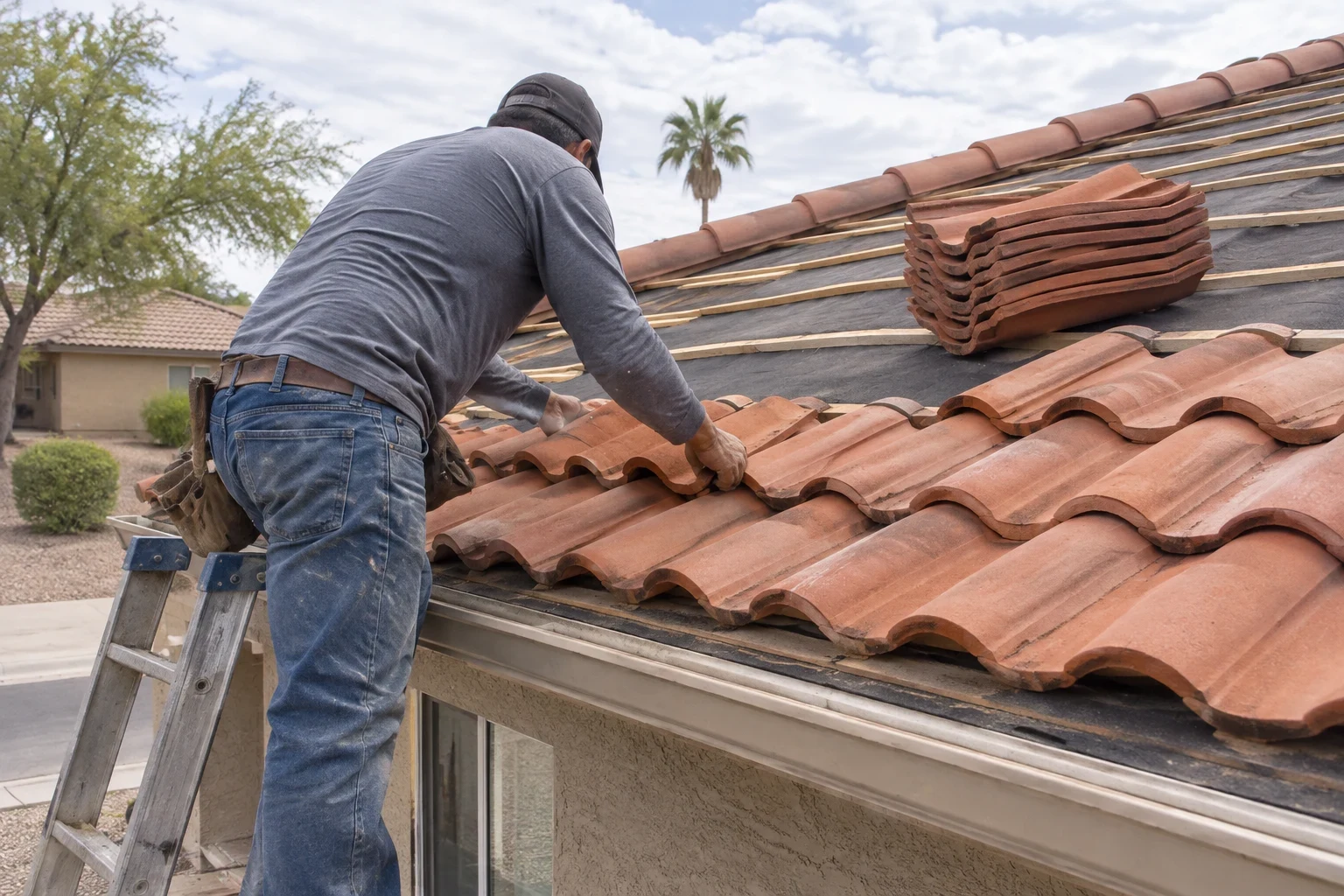
Tile lasts. What sits underneath needs care.
A concrete or clay tile can outlast the rest of your home. The underlayment beneath it cannot. Years of desert sun bake felt until it turns brittle and splits, and once that happens, the water that slips past the tiles in a hard rain runs straight to the wood deck.
That is why most of our tile work is not really about the tiles. Often we can lift your existing tiles, replace the underlayment and flashing, and set the same tiles back in place. When tiles are discontinued, badly broken or the deck has rotted, we say so plainly and talk through new tile or another option such as shingle roofing.
The job does not end when the crew drives away. We return later to see how the roof is holding up, and we explain what to do and what to avoid so the finish stays sound.
What our tile roofing work includes
Underlayment replacement
We strip the old felt down to the deck and lay new underlayment suited to tile. Battens are reset or replaced where they have rotted or pulled loose.
Tile lift and re-lay
Sound tiles are lifted, stacked carefully on the roof and reset in their original pattern. Cracked pieces are replaced with the closest match we can source.
Flashing at valleys and walls
Valleys, wall lines, chimneys and pipe penetrations get new metal flashing. These are the spots where most tile leaks start.
Cracked and slipped tile repair
For smaller problems we replace broken tiles and refasten ones that have slid. We check the felt beneath before closing the area back up.
Eave closures and bird stops
Closure strips at the eaves keep birds and windblown debris out of the open gaps under the first row of tile.
Check-back visit and care notes
Once the job wraps up, we return, look over the work with you, and leave plain written notes on looking after a tile roof.
Signs your tile roof needs attention
- Ceiling stains after rain
- A brown ring on a ceiling, often near a valley or an exterior wall, usually points to failed underlayment. The tiles above can look perfectly fine.
- Cracked or slipped tiles
- Foot traffic from solar, satellite or air conditioning service cracks tile easily. A slipped tile leaves felt exposed to direct sun, which speeds up its breakdown.
- Brittle felt at the eaves
- Look at the underlayment showing along the roof edge. If it flakes apart or curls under your fingers, the felt farther up the slope has probably aged the same way.
- Debris or nests under tiles
- Leaves packed into valleys or birds nesting under the first row hold moisture and block the path water should take off the roof.
- Original underlayment on an older roof
- Many tile roofs still carry their first layer of felt. Age alone is a fair reason to ask whether a re-lay makes sense before leaks begin.
How a tile roof job runs
- 1
Look it over and talk it through
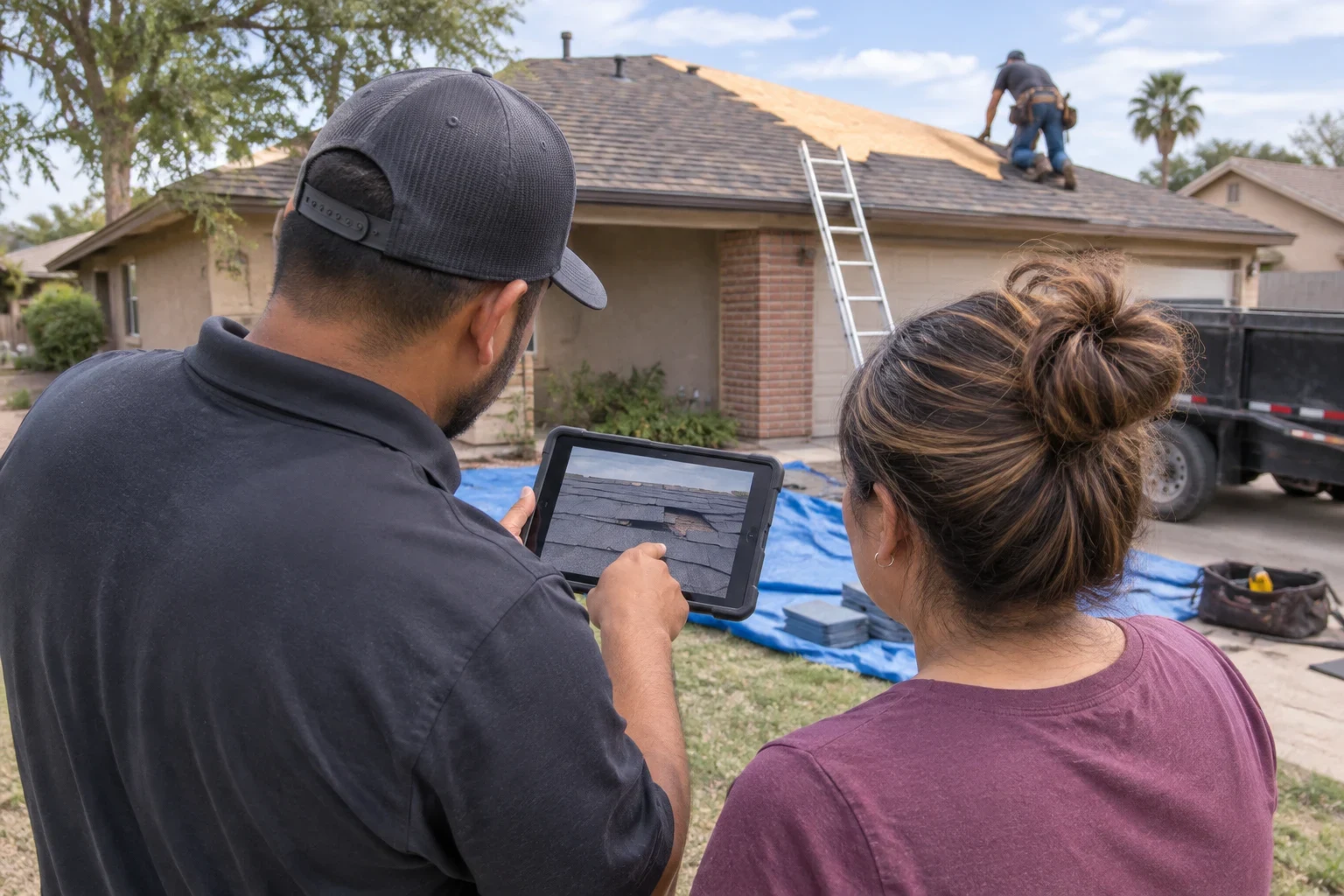
We come out, check the tiles, flashing and any visible felt, and look in the attic for staining. You get a written line-item estimate with photos of what we found and a straight answer on repair, re-lay or replacement.
- 2
Protect the property
We cover landscaping, patios and walkways and set up a spot to stage tiles. In the summer months we start early so the heaviest work happens before the afternoon heat.
- 3
Lift, replace and reset
Tiles come off in sections, the old underlayment is removed and the deck is checked for soft spots. New underlayment, battens and flashing go down, then the tiles are set back and fastened.
- 4
Clean up and walk the roof
We clear debris, sweep the yard with a magnet for stray nails and walk you through the finished work.
- 5
Check back
Once the roof has had time to settle in, we follow up to see how it is doing and answer anything that has come up since.
What moves the cost of tile roofing
Tile work is priced by roof area and by what we find underneath. Every line on the estimate is explained before work starts, and if something unexpected turns up, we show you and talk it through before doing anything beyond the agreed scope.
- Roof size and pitch
- Larger and steeper roofs take more material, more staging and more careful handling of tile.
- Reusing tile or buying new
- Re-laying sound tiles keeps material costs down. Discontinued profiles, heavy breakage or a switch from concrete to clay raise them.
- Deck condition
- Rotted sheathing hidden under old felt has to be replaced before new underlayment goes down.
- Underlayment choice
- Heavier felts and synthetic underlayments differ in price and in how they hold up to years of heat.
- Flashing and roof details
- Multiple valleys, skylights, chimneys and wall transitions each add labor and metal.
Tile roofing questions
- Can we keep the tiles already on our roof?
- In most cases. A concrete or clay tile frequently has decades left in it long past the point where the felt underneath has worn out. Any pieces that are cracked get pulled aside, and we replace them with the nearest match we can source.
- How long does a tile re-lay take?
- Roof area sets most of the schedule, and the condition of the wood deck beneath the old felt sets the rest. Your estimate includes an expected timeline, and if soft sheathing or a summer storm pushes things back, we let you know and explain the new plan.
- Is it safe to walk on a tile roof?
- Tile cracks under a misplaced step. If a solar, satellite or air conditioning technician needs to go up, ask them to step on the lower third of each tile, near the overlap. Our care notes cover this in more detail.
- Should I choose concrete or clay tile?
- Concrete tile is heavier and costs less, with many profiles and colors. Clay holds its color longer and weighs less in some styles, but costs more. We explain how each suits your roof framing and the look of your home.
- Do you handle the permit?
- Yes. When the city requires a permit for the work, we pull it and arrange the sign-off as part of the job.
- What happens once the job is finished?
- We check back to see how the roof is holding up and answer any questions. You also keep our written care notes, which cover clearing valleys, keeping foot traffic off the tile and what to watch for after a heavy rain.
Talk with us about your tile roof
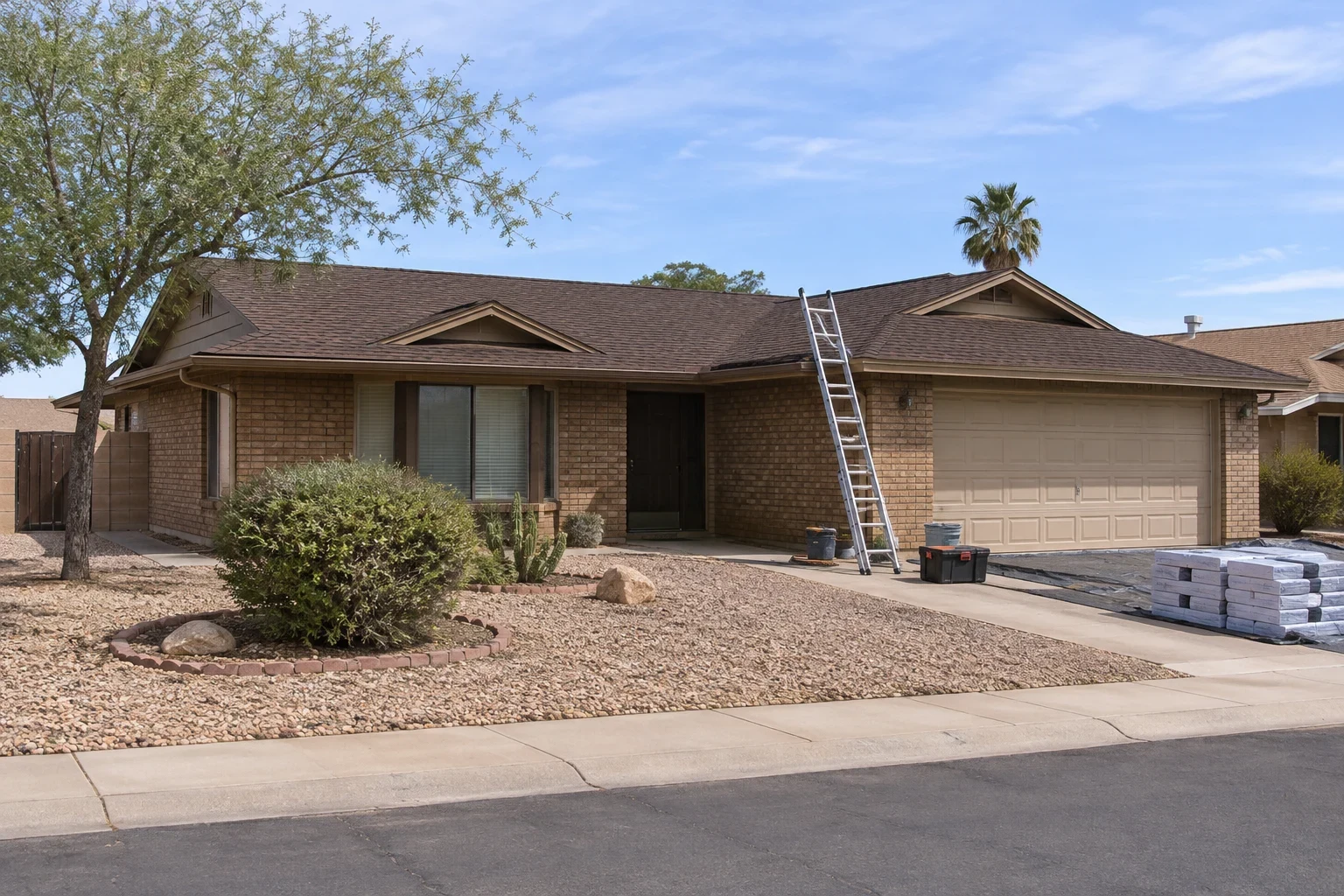
Tell us what you are seeing and we will explain the likely options before anyone climbs a ladder. We work on tile roofs in El Mirage and nearby towns including Surprise, Sun City and Youngtown.