ServicesFoam Roofing
Foam Roofing in El Mirage
We spray polyurethane foam over flat and low-slope roofs, shape it so water runs to the drains, and seal it with a coating that stands up to the sun. After the job, we come back to look it over and show you how to keep it in good shape.
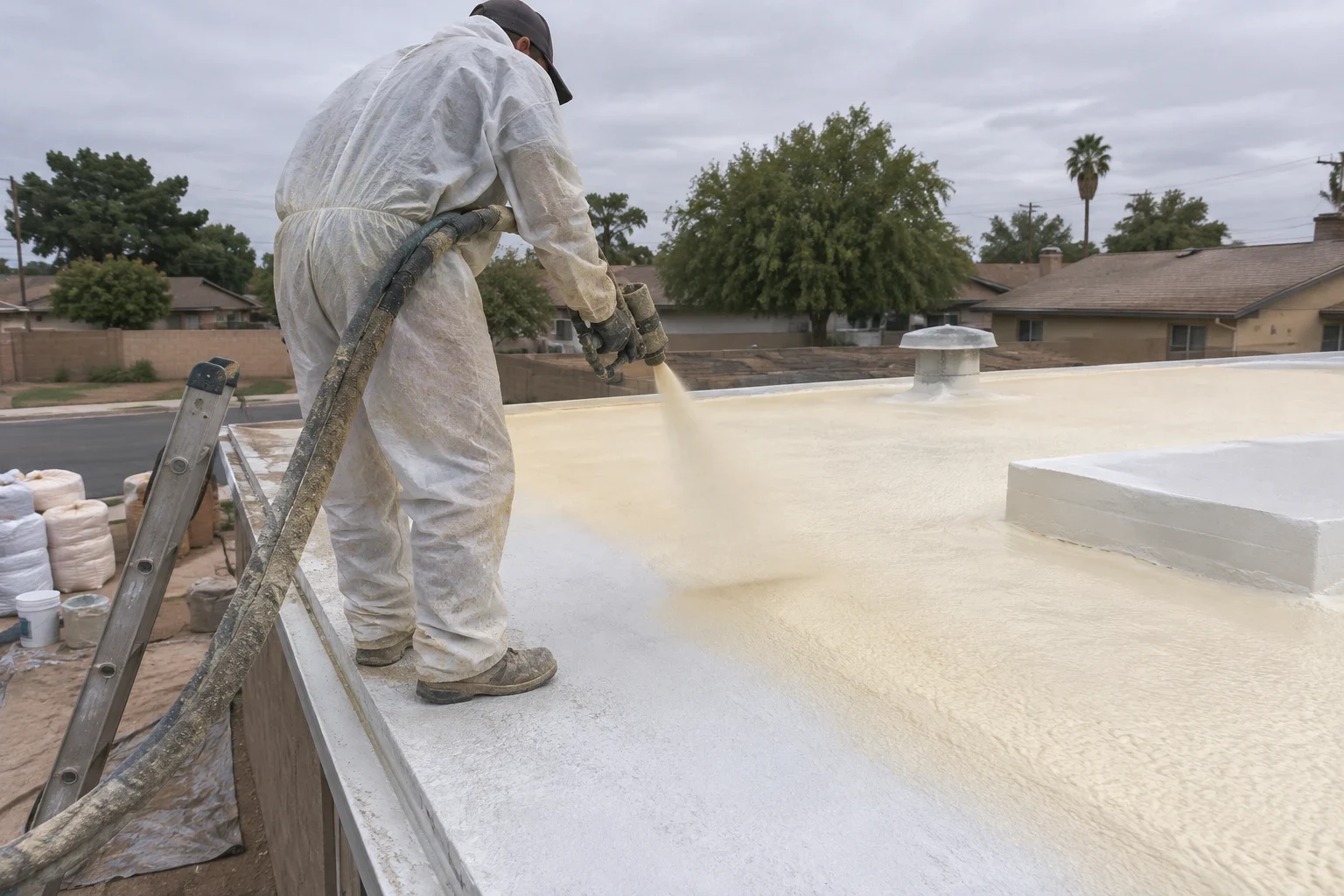
A roof that is sprayed on, not pieced together
Foam roofing starts as two liquids mixed at the spray gun. On contact it expands into a rigid, closed-cell layer that bonds to the deck and wraps around vents, pipes and parapet walls without seams. That single continuous surface is why foam works so well on flat roofs, where seams and laps are usually where leaks begin.
The foam itself is not the finished roof. Sunlight breaks it down, so every foam roof needs an elastomeric coating on top, and that coating is what you maintain over the years. Under a hard desert sun, how well the coating is applied and how well it is cared for decide how long the roof lasts.
That is why we treat the visit after the job as part of the work. We return once the roof has been through some weather, check the coating and the drains, and leave you with clear notes on what to watch for. If your roof has a different surface, our flat roofing page covers the other options we install.
What the work includes
Surface preparation
We remove loose gravel, failed patches and debris, then clean and dry the deck. Foam only bonds well to a sound, dry surface, so this step gets real time.
Wet area removal
If an older roof is holding water, we cut out the soaked sections before spraying. Sealing moisture under new foam only moves the problem out of sight.
Foam built to slope
We vary the foam thickness to push water toward scuppers and drains and away from low spots. The added thickness also brings extra insulation to the rooms below.
Coating in layers
A base coat and a top coat go on in contrasting colors so we can see full coverage. Granules can be set into the top coat where you or your HVAC technician will walk.
Detail work at penetrations
Rooftop AC stands, vent pipes, skylight curbs and parapet edges get extra attention, since these are where foam roofs most often wear first.
Check-back visit and care notes
After completion we come back to walk the roof with you, confirm water drains the way it should, and explain how to keep the coating healthy.
Signs your foam roof needs attention
Brown or powdery foam
When the coating wears thin, the foam underneath turns tan, then dark brown, and starts to crumble. Catching this early often means a recoat rather than new foam.
Blisters or soft spots
Raised bubbles or spongy areas usually point to moisture or a bond that has let go. These need to be cut out and repaired before they spread.
Water that sits after rain
Ponding that stays a couple of days after a storm wears coating faster and can find its way into small cracks.
Small holes and pecking
Birds sometimes peck at exposed foam. Each hole is a direct path for water and sun to work into the roof.
Cracks around equipment
Foot traffic and vibration around AC units can crack the coating. A leak near a vent or unit often starts here.
How a foam roofing job runs
- 1
Talk it through and look at the roof
We start with a phone call, then visit to measure, check the deck and note any wet areas. You get a written line-item estimate and an honest answer on whether a recoat, repair or full foam roof makes sense.
- 2
Prepare and protect
On the day, we clean and dry the roof and mask nearby walls, windows and equipment. Spray foam can drift in wind, so we ask that cars be moved and we schedule spraying for calmer hours.
- 3
Spray and coat
Foam goes down in passes to the planned thickness and slope. Once it cures, we apply the base and top coats, then set granules in the walk paths.
- 4
Walk-through and cleanup
We walk the finished roof with you, show you the drains and the details at each penetration, and clear masking and debris from the property.
- 5
Come back and check
Later we return to look at the coating, the drains and any spots that took traffic, and we go over the simple care that keeps the roof sealed.
What moves the cost of a foam roof
Every foam roof is priced from the roof itself, so we measure and look before giving a number. Your written estimate lists each part of the job, and we explain any line that changes if we find something unexpected.
- Roof size and shape
- Square footage sets the amount of foam and coating. Parapet walls, multiple levels and tight corners add labor.
- What is underneath
- A dry, sound roof can often be foamed over. Wet insulation, rotted decking or old gravel that must come off adds to the work.
- Foam thickness and slope
- Correcting low spots or adding insulation means more foam in some areas than others.
- Coating type
- Acrylic and silicone coatings differ in cost, in how they handle standing water and in what they need later. We explain the tradeoff for your roof.
- Rooftop equipment
- AC units, skylights and many vent pipes each need detailed sealing and sometimes temporary lifting.
Foam roofing questions
Something not covered here? (623) 462-1657
Can foam go over my existing roof?
Often, yes. If the current roof is dry and firmly attached, foam can be sprayed over it, which avoids a full tear-off. Wet or loose sections have to come out first, and we will show you photos of what we find.
How often does a foam roof need recoating?
It depends on the coating type and thickness and how much sun and foot traffic the roof sees. The foam can last a long time if the coating is kept intact. At our check-back visit we tell you what to look for so you can plan a recoat before the foam is exposed.
Can I walk on a foam roof?
Yes, carefully. Foam is firm but can be dented by sharp heels, dropped tools or dragged equipment. We add granules to the paths most people use, and we suggest asking any HVAC technician to stay on them.
Will the work disrupt my home?
Most of the work happens outside and above you. There is noise from the equipment and a smell during spraying that fades as the foam cures. We ask you to move vehicles and close windows on the spray day.
Is foam a good choice for a sloped tile or shingle roof?
Foam is meant for flat and low-slope roofs. For pitched roofs we would point you to our tile roofing or shingle roofing work instead, and many homes have both a pitched section and a flat section we can handle together.
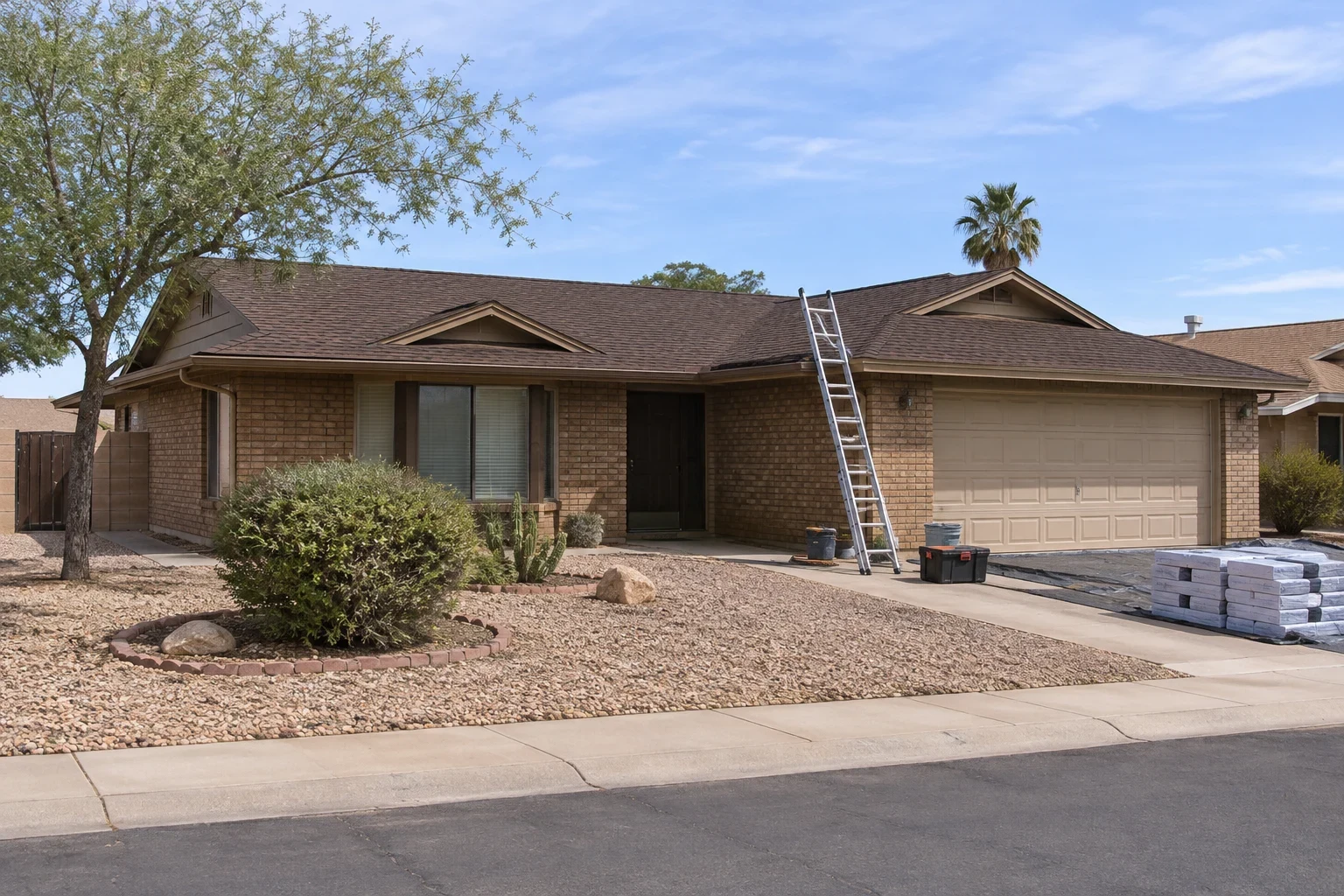
Ready to talk about your flat roof
Tell us what you are seeing on the roof and we will set a time to measure and look. You will get a clear estimate, and after the job we come back to check our work.