ServicesFlat Roofing
Flat Roofing in El Mirage
We install and rebuild low-slope roofs with modified bitumen, TPO and reflective coatings, sloped so water reaches the scuppers instead of sitting on the deck. A few weeks later we return to look over seams and drains, and we leave you with clear care steps.
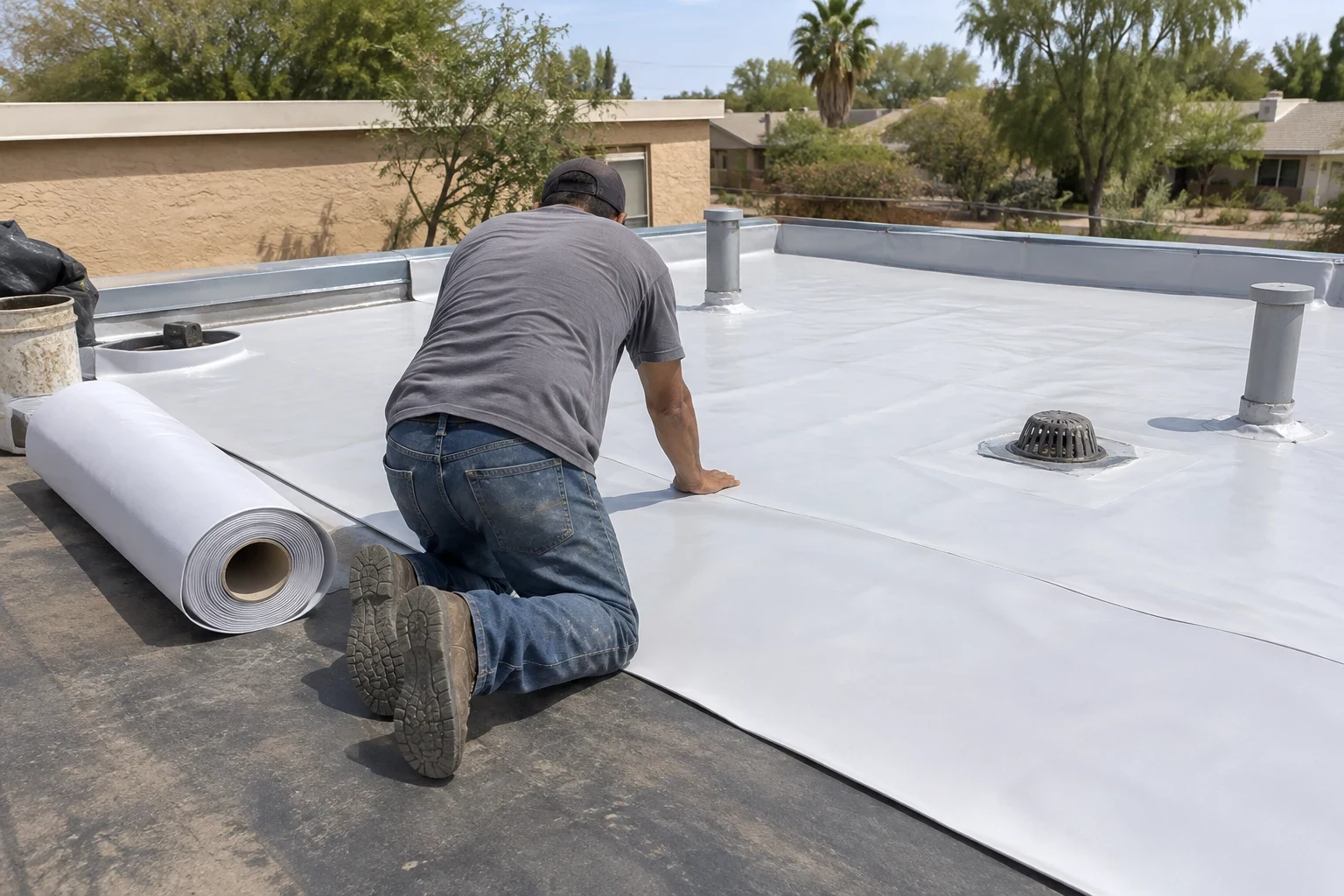
When a flat roof is the right roof
Plenty of homes here have a low-slope section somewhere: the main roof on a Pueblo or Santa Fe style house, a patio cover, a garage addition, or a deck hidden behind a parapet wall. These roofs do not shed water the way tile or shingles do. They depend on a continuous membrane, careful seams and a deck that carries water to a drain or scupper.
We work with three main systems. Modified bitumen is a heavy sheet that holds up to foot traffic around rooftop AC units. TPO is a white single-ply membrane with heat-welded seams that reflects strong sun. An elastomeric coating can extend a sound roof that has only worn at the surface. If a sprayed system suits your roof better, our Foam Roofing page explains that option.
The job does not end when the crew drives away. We schedule a second visit to confirm the drainage works as planned, and we teach you the simple habits that keep small issues small.
What our flat roofing work includes
- Tear-off to a sound deck
- We remove the old layers and check the decking underneath. Soft or delaminated plywood is replaced before anything new goes down, and we show you photos of what we found.
- Tapered insulation and crickets
- Low spots are where flat roofs fail. We add tapered board or crickets so water moves toward the scuppers instead of ponding for days.
- Membrane or coating
- Modified bitumen, TPO or an elastomeric coating, chosen for your roof's condition, foot traffic and budget. Seams are welded or lapped and rolled, not just pressed into place.
- Parapets, curbs and penetrations
- Parapet walls, AC curbs, vent pipes and skylights each get their own flashing. Most leaks start at these edges, so we give them extra time.
- Cleanup and a care walk-through
- We clear debris and fasteners from the yard, then explain what to watch for and how often to clear the drains.
- A return visit
- A few weeks after the job, we come back to check seams, drains and flashing and answer anything that came up since.
Signs your flat roof needs attention
Water that lingers on the deck
Ponding that stays more than a day or two means the deck has sagged or the slope was never right. Standing water ages a membrane quickly.
Blisters or a cracked surface
Bubbles in modified bitumen, or a scaly, alligatored look on an older built-up roof, point to trapped moisture and sun wear. Both get worse with every summer.
Open seams or lifted edges
If a seam lifts under your finger or the edge is pulling away from the parapet, wind-driven monsoon rain will find its way in.
Ceiling stains under a low-slope section
Brown rings under a patio roof or flat addition often trace back to flashing around an AC unit or vent rather than the middle of the roof.
Coating worn through
When the white coating has thinned and the darker layer shows, the roof absorbs more heat and the base material is exposed.
How a flat roof job runs
- 1
A look at the roof
We walk the roof, check the drains and look at the deck from below where we can. You get a written, line-item estimate that says plainly whether a repair, a recoat or a new system makes sense.
- 2
Scheduling and prep
We plan around the weather and set a start date with you. On the day, we cover plants, the AC unit and walkways, and stage materials so your driveway stays usable.
- 3
Building the roof
Tear-off, deck repair, slope corrections and the new membrane go on in that order. We keep the roof sealed at the end of each day so nothing is left open overnight.
- 4
Cleanup and walk-through
We run a magnet over the yard for nails, then show you the finished roof, the scuppers and what needs to stay clear.
- 5
Checking back
Once the first good rain has come through, or a few weeks have passed, we return to look at the seams and confirm water leaves the roof the way it should.
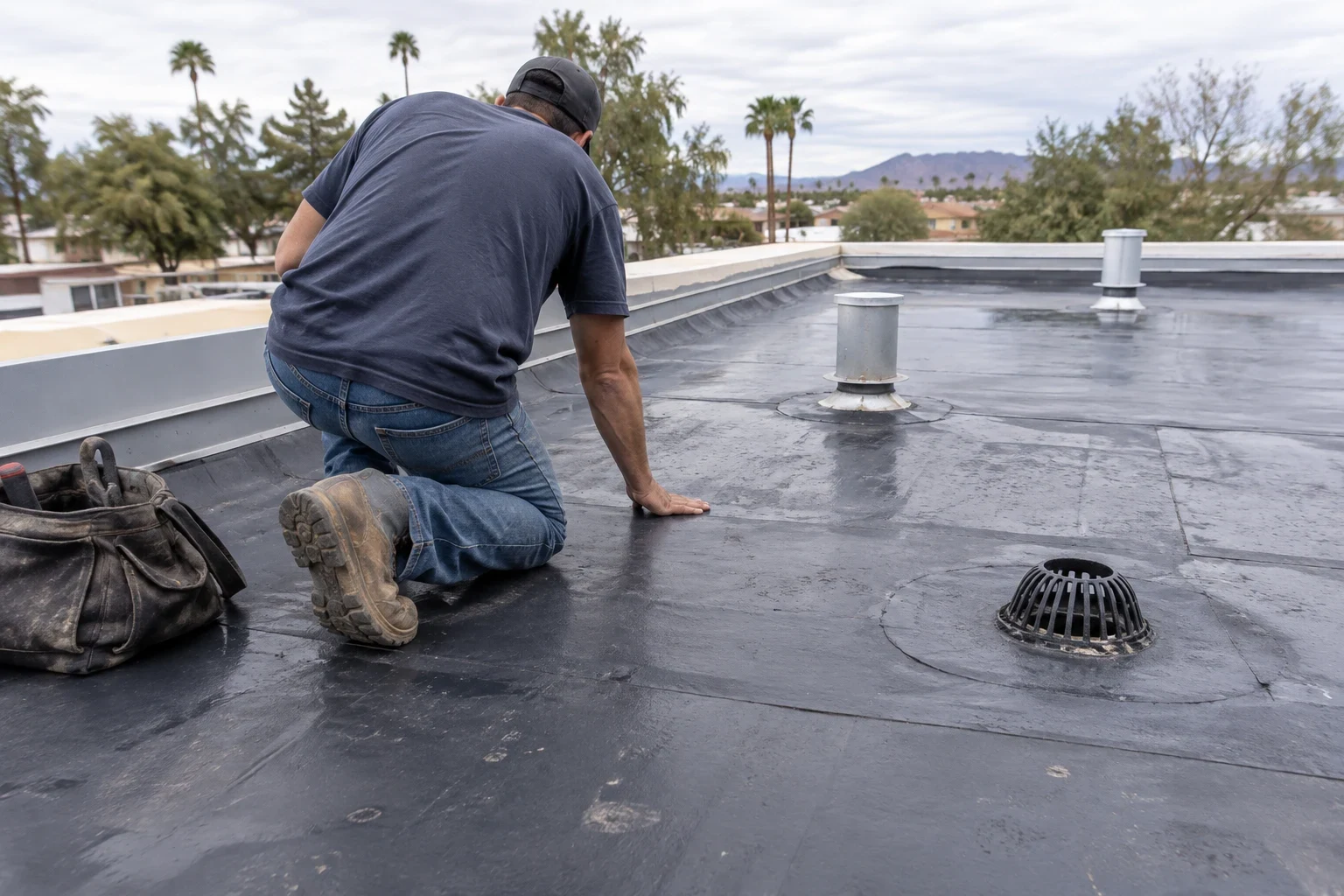
What shapes the price of a flat roof
Flat roofs price differently from one house to the next because the hidden layers matter as much as the surface. Each part appears as its own line on the written estimate, so nothing is bundled out of sight. The factors below carry the most weight.
- Size and number of layers
- More square footage means more material, and every old layer that has to come off adds labor and disposal.
- Deck condition
- Water-damaged plywood is only visible once the roof is open. We photograph it and explain any added cost before replacing it.
- The system you choose
- A recoat over a sound roof costs less than a full TPO or modified bitumen install. The right choice depends on what is underneath.
- Drainage corrections
- Adding tapered insulation, crickets or a new scupper adds material and time, and it is often what keeps the new roof from failing early.
- Rooftop equipment and access
- AC units may need to be lifted and reset, and tight parapets or a hard-to-reach patio roof slow the work.
Flat roofing questions
Something not covered here? (623) 462-1657
Can you coat over my existing flat roof?
Sometimes. A coating works when the roof underneath is dry, well attached and mostly sound. If there is trapped moisture or soft decking, a coating just hides the problem, and we will tell you that up front.
Why does water sit on my roof when it rains?
Usually the deck has sagged, the original slope was too shallow, or a scupper is partly blocked. We find the cause and correct the slope with tapered insulation or crickets when we rebuild the roof.
Can I walk on my flat roof?
Light foot traffic for clearing drains or servicing the AC is fine on most systems. Walk on the field of the roof, not the seams or flashing, and avoid hot afternoons when the surface is softer. Modified bitumen tolerates traffic better than a coating does.
What care does a flat roof need once you finish?
Keep scuppers and drains clear of leaves and debris, especially before monsoon season. Look for pooling following a storm and any lifted edges along the parapet. We go over this in person at the end of the job and again when we come back to check the work.
Do I need a permit for a new flat roof?
A full replacement generally needs a permit from the city. We pull it as part of the job and handle the scheduling for the city's sign-off, so you do not have to sort that out yourself.
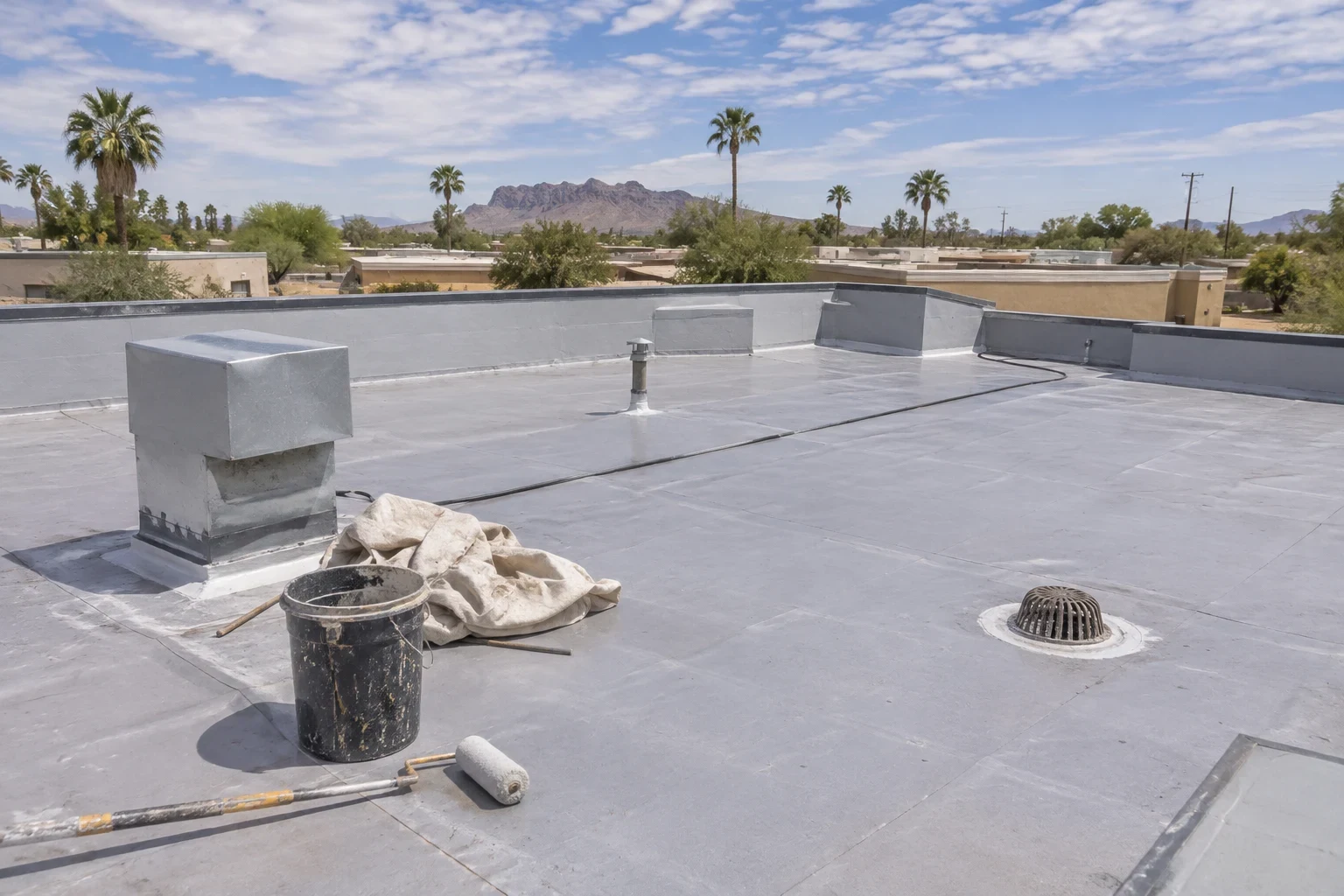
Let's talk about your flat roof
Tell us what you are seeing and how the roof gets used. We will go over the options and set a time to come out and put together your quote.