ServicesNew Roof Installation
New Roof Installation in El Mirage
When you are building something new, the roof is the part that has to work from the first rain. We install tile, shingle, foam and flat roof systems on additions, casitas, garages and new homes, then come back afterward to check the work and show you how to care for it.
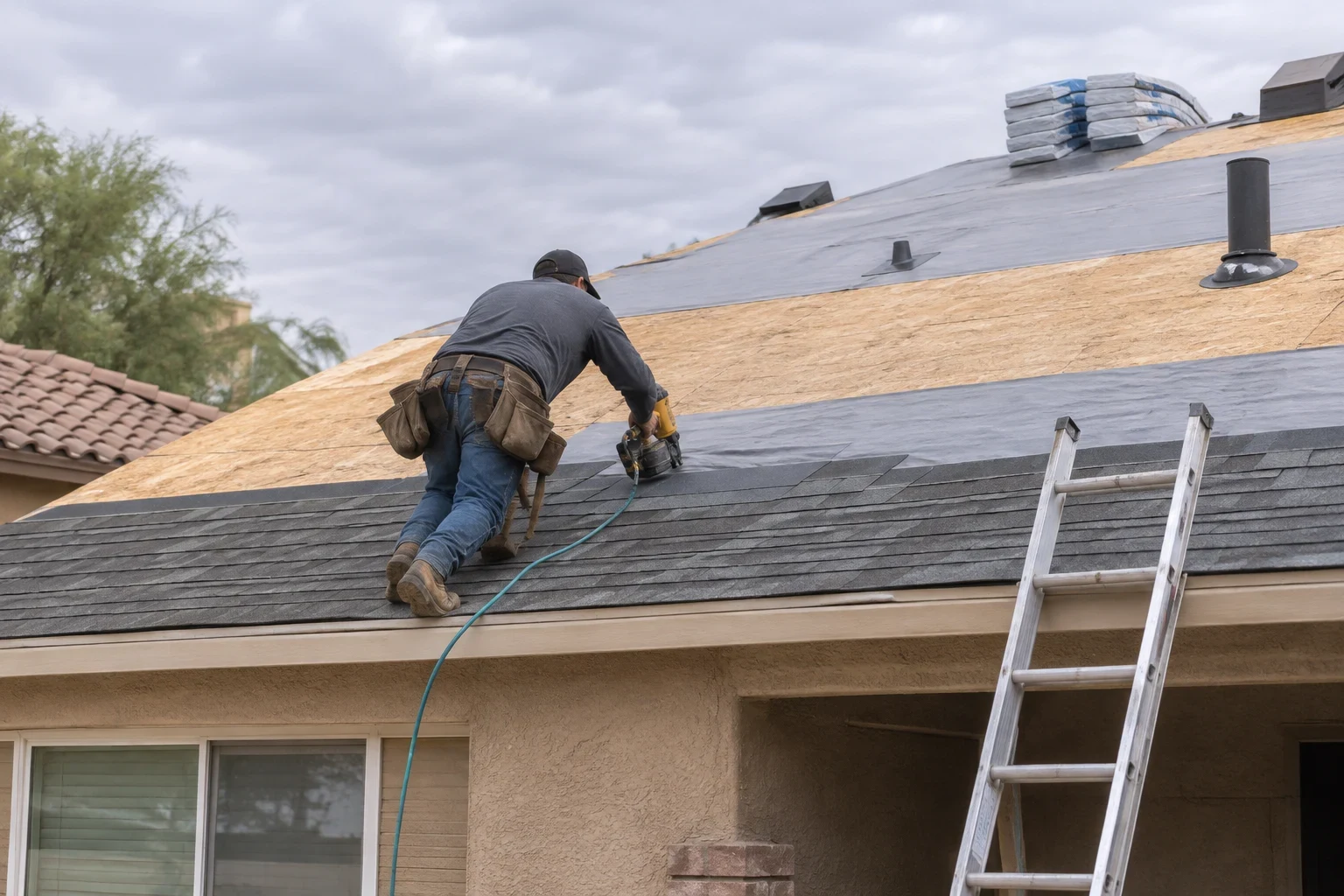
A first roof, built to match your plans
New roof installation is roofing over framing that has never carried a roof before. That might be a bedroom addition, a detached garage, a casita out back or a full new house. There is no old material to tear off, but there is more to decide: the deck, the underlayment, the roofing material and how the new section meets anything already standing.
We read your plans, confirm the pitch and the material your framing was designed for, and build the roof in layers that suit the Arizona sun. Tile needs a heavier deck and a high-temperature underlayment. Low-slope sections need foam or a flat roof membrane, not shingles stretched past their limits.
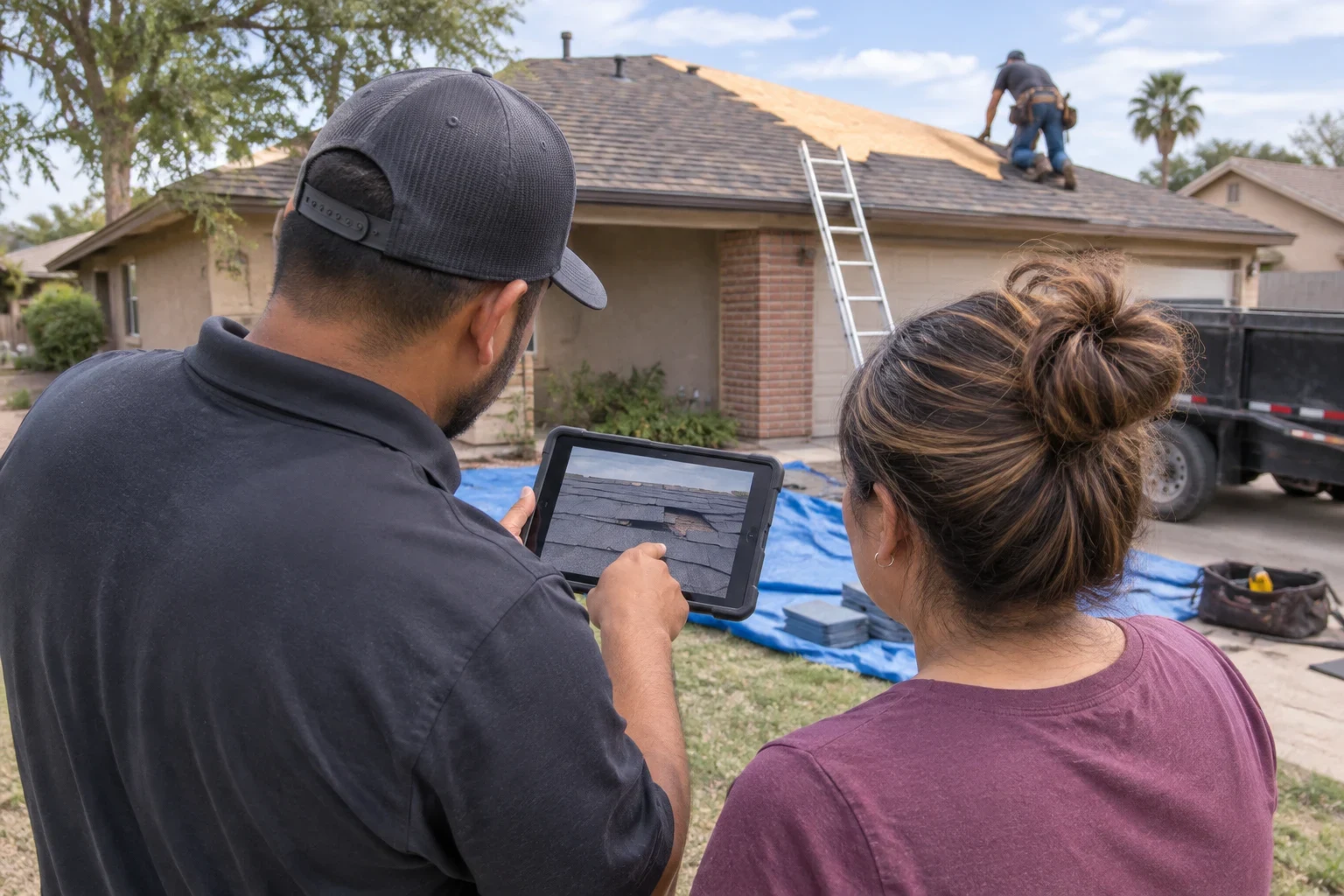
When the last piece is in, our work is not quite finished. We return after the roof has settled through some heat and weather, look it over with you and leave plain notes on caring for the material you chose.
What the installation covers
Plan and pitch review
We check the roof pitch, framing and material called for on your plans before ordering anything. If a low-slope section was drawn with a steep-slope product, we flag it early.
Deck and underlayment
We install or confirm the sheathing, then lay underlayment rated for the surface temperatures a roof reaches here in summer. This layer does most of the waterproofing under tile.
The roofing system itself
Concrete or clay tile, architectural shingles, spray foam with a reflective coating, or a flat roof membrane. Each is installed to its own fastening and overlap requirements.
Flashing and penetrations
Valleys, walls, vents, skylights and plumbing stacks get proper metal flashing and sealing. These details decide whether a new roof stays dry for decades.
Tie-in to the existing roof
On additions, we cut the new section into your current roof so water flows across the joint, and we match tile profile or shingle color as closely as the market allows.
Cleanup and the follow-up visit
We clear debris and run a magnet over the yard for nails. Later we come back to check the roof and walk you through its care.
When a new roof installation is the right call
- You are adding living space
- A bedroom, family room or enclosed patio needs a roof that blends with the house and joins it without a weak seam.
- A casita or guest house is going up
- Small detached buildings still need a full roof system, including underlayment and flashing, not a shortcut version.
- You are building a garage or workshop
- Garages often use a lower pitch or a flat section, which changes which materials will actually hold up.
- Your new home is framed and ready
- Builders and owner-builders bring us in once trusses and walls are up. If your current roof is worn out instead, our roof replacement page is the better fit.
How the work runs
- 1
A conversation and a site visit
You call, tell us about the project and we arrange a time to see the framing or plans in person. We measure, note how the new roof meets anything existing and talk through materials.
- 2
Written estimate and permit
You get a line-item estimate showing materials, labor and any tie-in work. Once you approve it, we handle the roofing permit and order material.
- 3
Deck, underlayment and inspection
We prepare the deck and lay underlayment, and any required inspection happens at this stage before the finish material covers it.
- 4
Installing the roof
Tile, shingles, foam or membrane go on, with flashing at every edge and penetration. We protect landscaping and walls, and we keep the site tidy at the end of each day.
- 5
Walkthrough and a visit back
We walk the finished roof with you and leave written care notes. After it has been through some weather, we return to check fasteners, flashing and coatings.
What shapes the price
Every new roof is priced from the actual plans and site, so we do not quote numbers before seeing them. These are the things that move the total most. Your written estimate lists each one on its own line so nothing turns up later.
- Size and pitch
- A larger roof takes more squares of material and more hours on the deck. A steep pitch slows the crew down and calls for added fall protection and staging.
- Material choice
- Tile is heavier and slower to set than shingles. Foam and flat membranes are priced by the area covered and the thickness of the coating.
- Tie-in complexity
- Joining an addition to an older roof can mean lifting and relaying some existing tile or shingles to get a clean, watertight joint.
- Details and penetrations
- Skylights, valleys, extra vents and wall transitions each add flashing work.
- Permits and scheduling
- Permit fees and inspection timing vary with the project, and summer heat can move working hours earlier in the day.
Questions about new roof installation
- How is this different from roof replacement?
- New roof installation goes on framing that has never had a roof. Roof replacement removes an existing roof first and deals with whatever is found underneath. If you are not sure which applies, describe the project on the phone and we will tell you.
- Can you match my existing tile on an addition?
- Usually close, though not always exact. Some older tile profiles and colors are discontinued, and new tile looks brighter until it weathers. We bring samples and show you the nearest match before anything is ordered.
- Do you work alongside my general contractor?
- Yes. We coordinate with your builder on framing readiness, inspection timing and other trades so the roof goes on when the structure is ready for it.
- What material should go on a low-slope garage or patio roof?
- Low slopes usually call for foam roofing or a flat roof membrane, because tile and shingles need more pitch to shed water. We look at the drawn pitch and recommend what fits it.
- What happens after the roof is finished?
- We walk the roof with you and leave written care notes for your material, such as how to keep foam coatings in good condition or why to avoid walking on tile. Then we come back after it has been through some weather to check it over.
Starting a build or an addition
Tell us what you are building and where it stands. We will talk through materials, timing and how the new roof will be cared for once it is on.